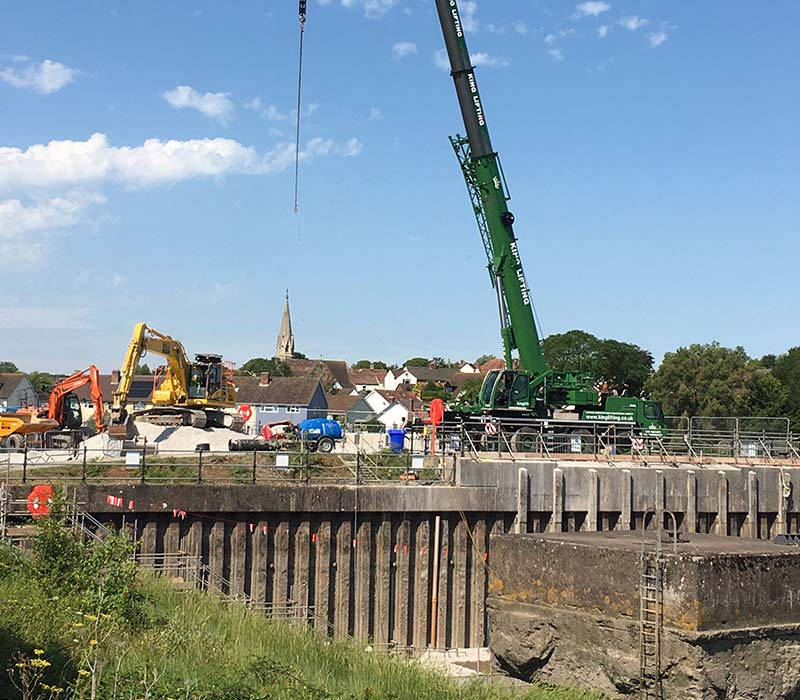
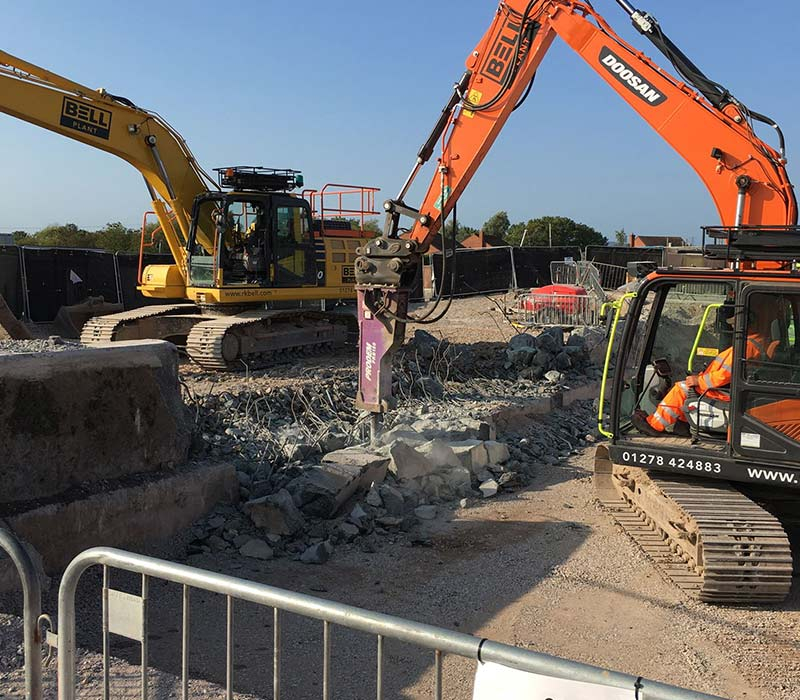
Environmental coordination was provided throughout the demolition and reconstruction of Combwich Wharf, a tidal zone site on the River Parrett situated upstream of the ecologically sensitive Bridgwater Bay Site of Special Scientific Interest (SSSI). Acting as the environmental subcontractor to Hochtief (on behalf of EDF), we managed environmental compliance, waste and resource tracking, surface water and flood risk, and supported implementation of contingency protocols. Our role ensured all works adhered to nuclear industry environmental standards and wider statutory requirements.
Combwich Wharf presented a uniquely constrained construction environment. The site was located within the tidal reach of the River Parrett, which flows into the SSSI. Regular tidal inundation posed risks to excavations, material storage, and concrete operations. At the same time, EDF’s nuclear governance demanded detailed environmental assurance and transparent performance reporting.
As environmental coordinator, we worked between the construction team (Hochtief) and the client (EDF), translating complex regulatory expectations into clear site practices and ensuring works progressed without environmental compromise.
Oversaw construction and integrity of a temporary clay flood bund to protect against tidal ingress during high-risk operations. Coordinated planning and execution of works within the tidal window and ensured operational changes were reflected in revised site documentation.
Managed designated storage and laydown areas, tracking material volumes to maintain separation of reusable, inert, and waste materials. Ensured all movements were logged, classified, and documented in line with Duty of Care requirements. Developed contingency protocols to safeguard material quality during flood risk periods.
Construction activities below Mean High Water Springs required strict adherence to Marine Management Organisation (MMO) licensing conditions. We coordinated with the contractor and regulators to ensure that excavation, piling and concreting operations within the tidal zone remained compliant throughout the demolition and rebuild phases. The downstream SSSI designation introduced stringent ecological constraints, particularly relating to surface water management, sediment control, and the selection of materials and substances used within the tidal zones. Our role involved integrating these environmental requirements into the construction programme, updating working methods accordingly, and verifying that all conditions were met without delay to the schedule.

Processed noise monitoring data against agreed thresholds, ensuring timely responses to exceedances. Worked with site teams to implement bunding and screening solutions where required, reducing potential nuisance to nearby receptors.
Delivered targeted environmental toolbox talks and coordinated pre- and post-task briefings around environmentally sensitive works. Used learning outcomes from each task to improve risk controls and develop site-wide understanding of environmental expectations.
Maintained performance reporting across KPIs such as waste segregation, fuel and material usage, and energy efficiency. Led response and close-out of environmental incidents, ensuring transparent reporting in line with EDF’s nuclear protocols and capturing lessons learned for continual improvement.
All demolition and reconstruction activities were completed with full environmental compliance, avoiding pollution incidents. Our active coordination between contractor and client bridged the gap between efficient construction delivery and high-level environmental governance. Material tracking, flood risk protocols, and environmental communications were embedded into the programme, ensuring SSSI protections were maintained while supporting critical infrastructure development.
This case study reflects our ability to deliver strategic environmental management and regulatory assurance in sensitive, high-risk construction environments.