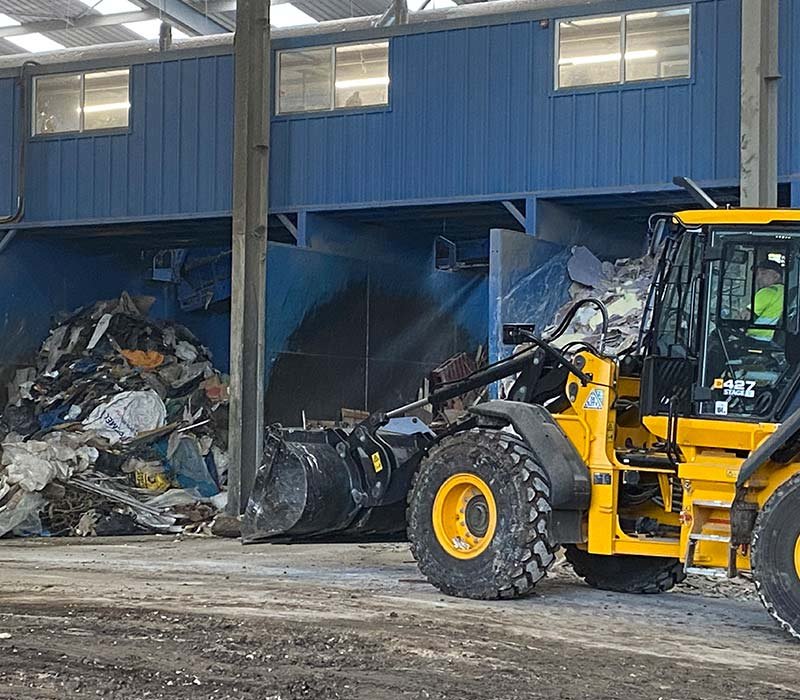
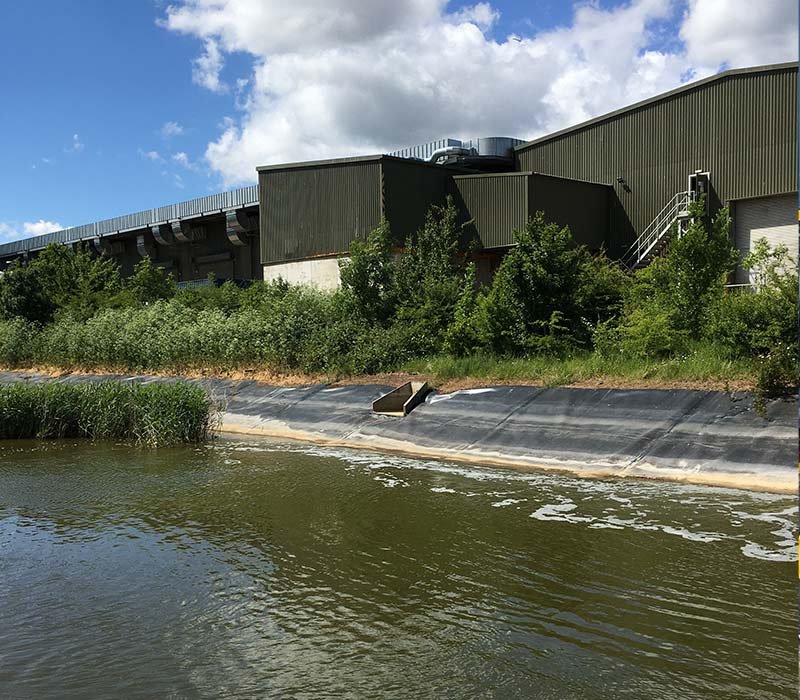
A detailed Fire Prevention Plan (FPP) was developed for a fully enclosed waste management facility handling a variety of combustible materials. The plan addressed EA Fire Prevention Plan compliance by designing a bespoke layout that met space, safety, and operational constraints. This included stockpile optimisation, firewater containment design, and waste rotation planning all measured, modelled, and validated to align with regulatory expectations while preserving throughput.
The client required a bespoke Fire Prevention Plan to obtain environmental permit approval for a high-throughput, enclosed waste facility. The building had fixed internal constraints, including steel columns, limited eaves height, and restricted turning areas for heavy plant, which made standard FPP layouts impractical. Space was at a premium, requiring a carefully engineered solution that would maximise operational capacity while maintaining full EA FPP compliance.
Internal measurements were conducted using laser distance meters to capture ceiling heights, steel column positions, and critical operational clearances. This allowed for precise mapping of waste stockpile locations, access corridors, and vehicle movement paths within the enclosed building footprint.
Using the measured dimensions, a bespoke layout was developed in CAD to ensure compliant separation between combustibles and access for fire service vehicles. The layout accounted for structural supports, tipping bays, and mechanical plant clearances, enabling real-world implementation.
Waste rotation intervals were modelled based on throughput, space availability, and waste type risk profiles. The plan included tailored storage duration limits, informed by site-specific operational cycles and supported with a clear inspection regime.
Surface gradients were mapped, and the drainage layout was analysed to determine the capacity of designated containment areas. Calculations accounted for rainfall, firefighting flows, and maximum stockpile volumes, ensuring sufficient containment without uncontrolled discharge.
Fire detection and suppression provisions were aligned with site operational zones. High-risk areas such as the loading pit and external storage bays were integrated into the plan, with pre-incident response diagrams developed to aid site operatives and fire responders.
All elements of the FPP including waste storage layout, rotation methodology, and containment calculations were supported by technical evidence, drawings, and quantified assessments. Where generic guidance could not be met due to structural constraints, site-specific risk-based justifications were clearly documented and cross-referenced to the regulatory requirements.

The resulting Fire Prevention Plan provided a tailored, technically supported solution that met EA guidance without compromising operational efficiency. The bespoke layout enabled optimal use of available space while maintaining clear fire separation and response access.
Key outcomes included:
The project demonstrates how precision measurement, CAD design, and regulatory understanding can be combined to deliver efficient and compliant Fire Prevention Plans especially where standard templates fall short.